AI-generated ingredient illustration
By BELLY Editorial · Published
THE SHORT ANSWER
How do you make a pea pasta sauce without a blender?
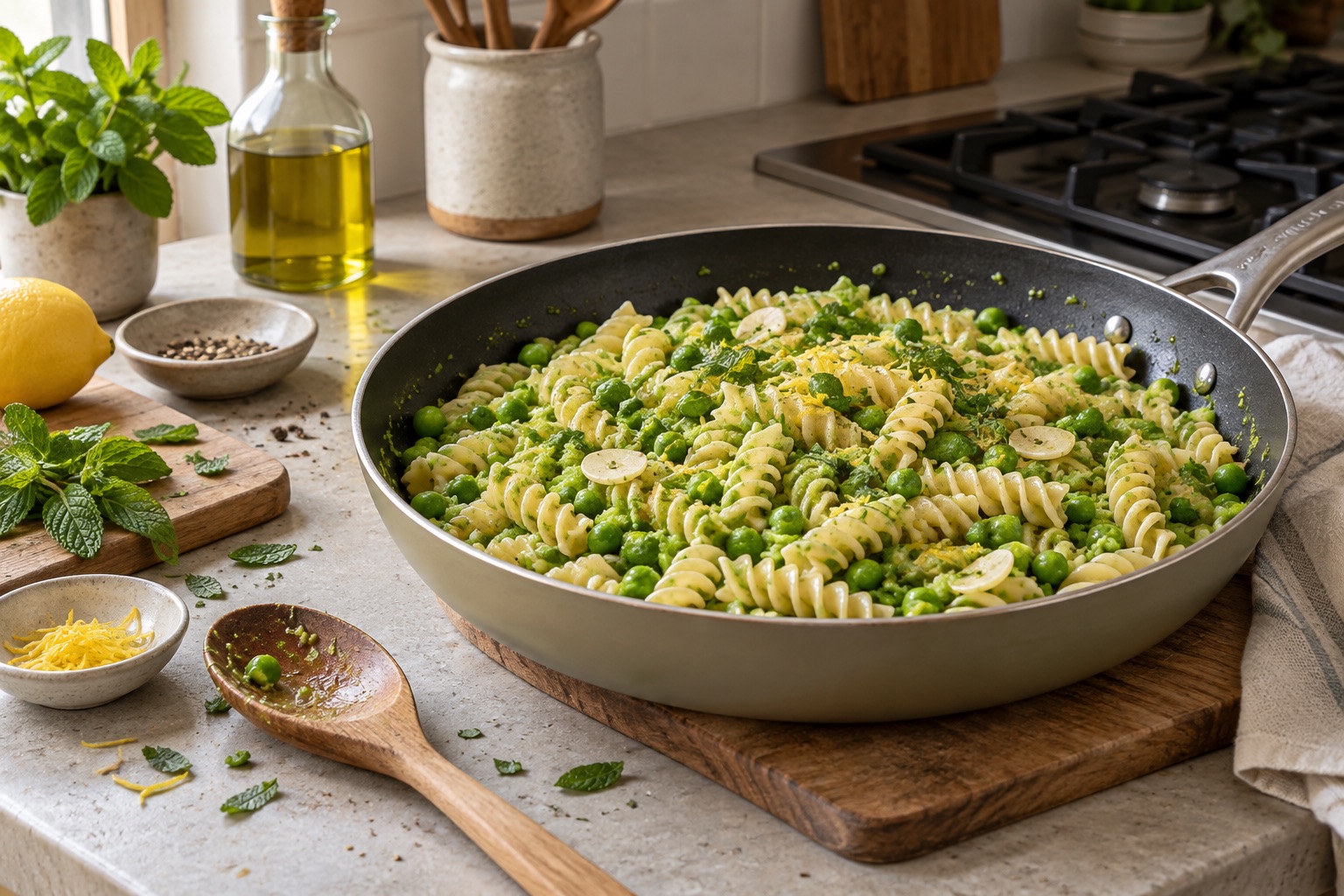
Cook frozen peas according to their packet, drain and mash half with a fork. Loosen the mash with a small amount of reserved pasta water, then combine it with the whole peas and pasta. It makes a coarse coating with visible pieces, not a smooth purée.
Sources and limitations ↓01
Choose the texture before the equipment
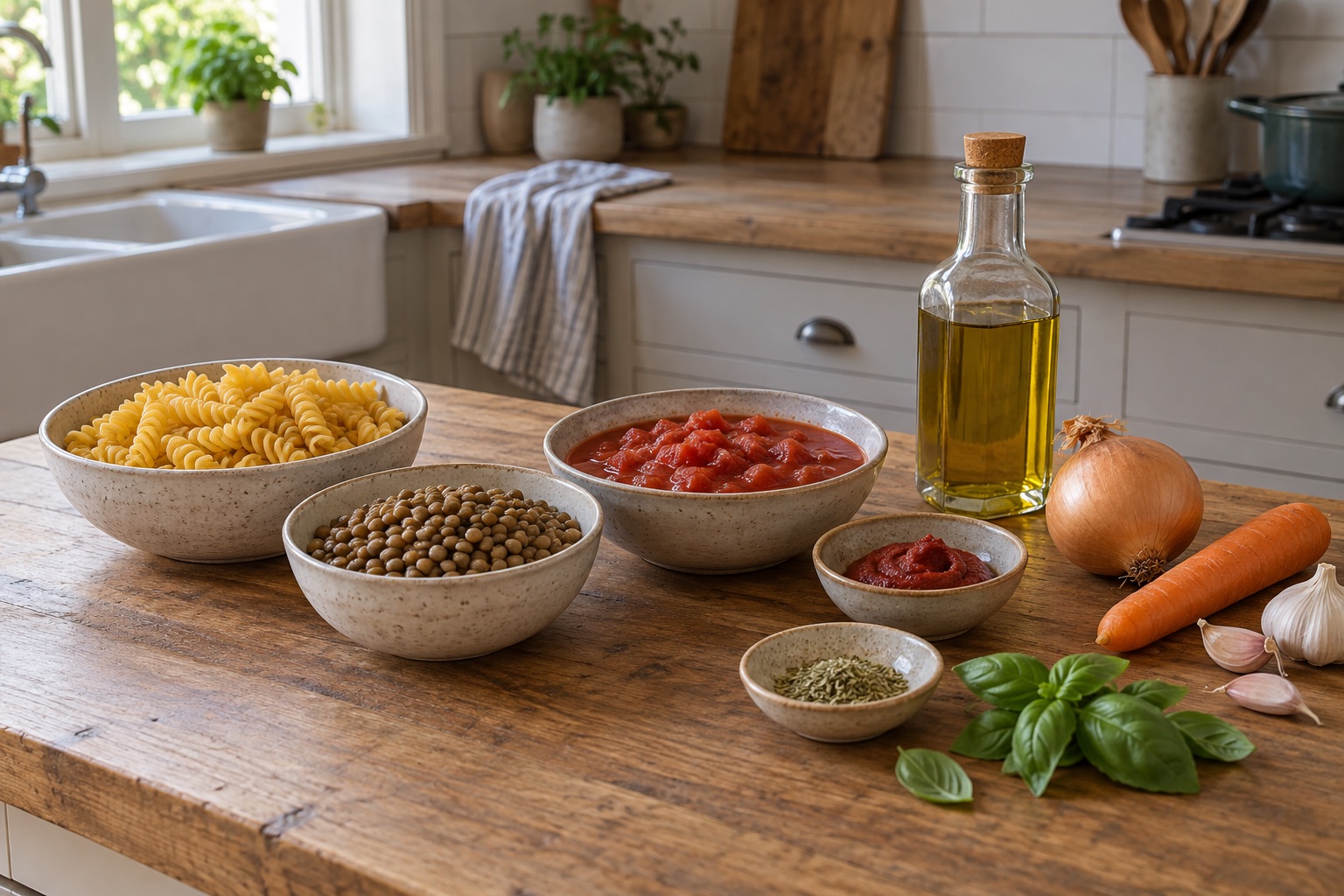
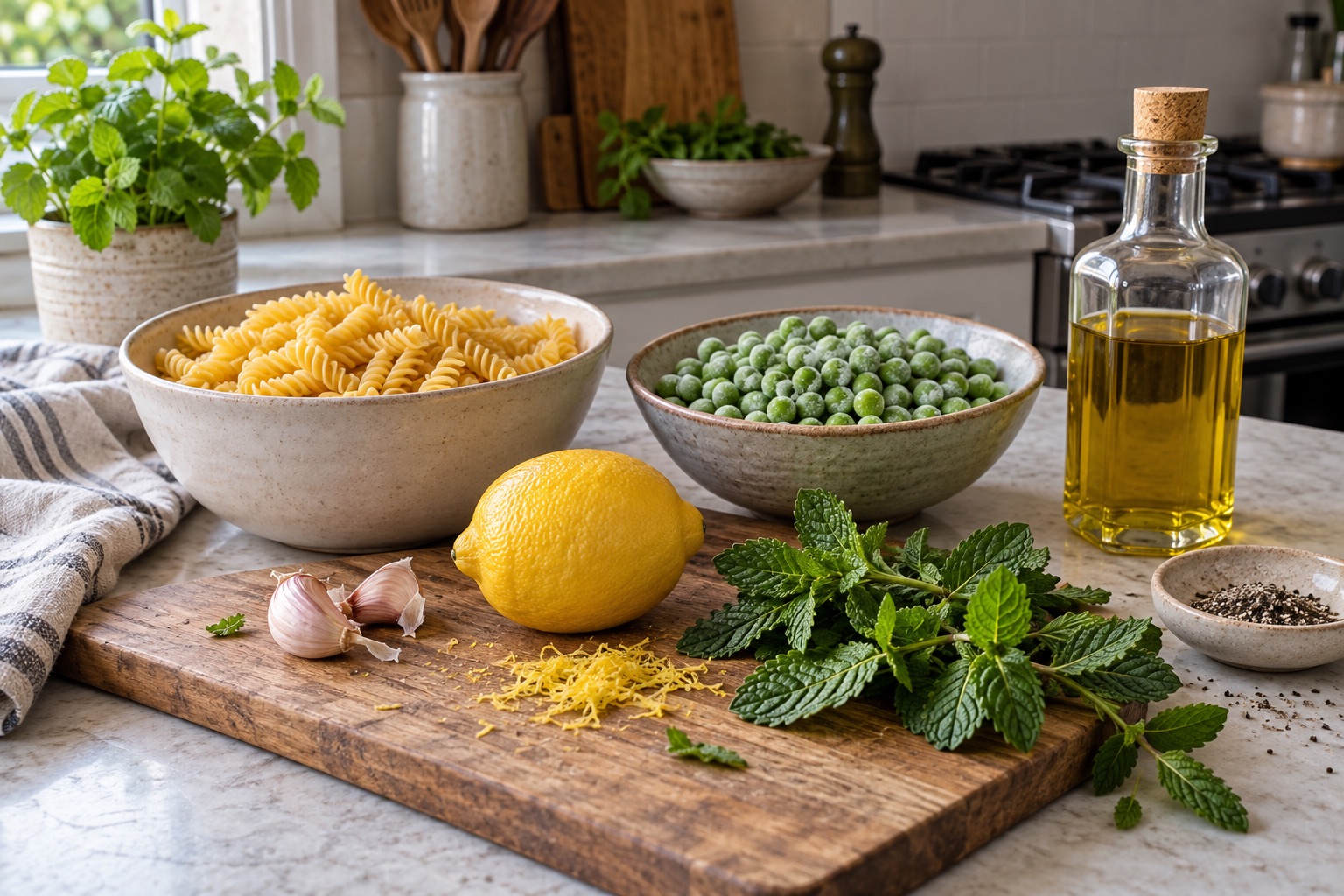
Pea pasta can mean whole peas tucked into spirals, a coarse mashed coating or a completely smooth sauce. Those are different dinners. Decide which you want before reaching for a blender. Our lemon and mint Fusilli keeps half the peas whole and mashes the rest with a fork. It gives the sauce something to cling to without pretending to be a cream sauce. A fork will leave pea skins and small pieces visible; that is the intended texture. If you want a silky purée, choose a recipe written for blending instead of pouring more water into this one.
02
Cook frozen peas according to their pack
Frozen peas are convenient to portion, but their packaging remains the instruction to follow. Measure what you need and return the rest to the freezer promptly. Cook the measured peas using the packet method and time, then drain them. Do not assume that thawing alone completes a cooking instruction. We cook the peas separately from the pasta so a difference between the two packets does not become a timing problem. This also makes it easier to reserve a portion of intact peas before mashing the remainder.
03
Mash first, loosen gradually
Put half the cooked peas in a heatproof bowl and mash with a fork. Add a small amount of the reserved pasta water, then work the mixture again. There is no need to make it perfectly smooth. Start with two tablespoons rather than the entire mug: you can loosen the coating further when it meets the pasta. If it looks thin before the pasta goes in, stop adding water. Whole peas bring little bursts of texture; the mashed portion supplies a rough coating. Both have a job.
04
Keep the garlic gentle and the mint late
Warm sliced garlic gently in olive oil while the pasta cooks. Watch it closely and lower the heat if it starts to brown quickly. The garlic should season the oil without dominating the bowl. Add the cooked peas and their coarse mash, then fold in the pasta. Finish with the lemon zest, a measured spoonful of juice and finely cut mint after removing the pan from the heat. Taste before adding more lemon. A lemon can vary in size and sharpness, so the recipe starts with a measured amount rather than an unqualified whole fruit.
05
Choose a shape that makes sense
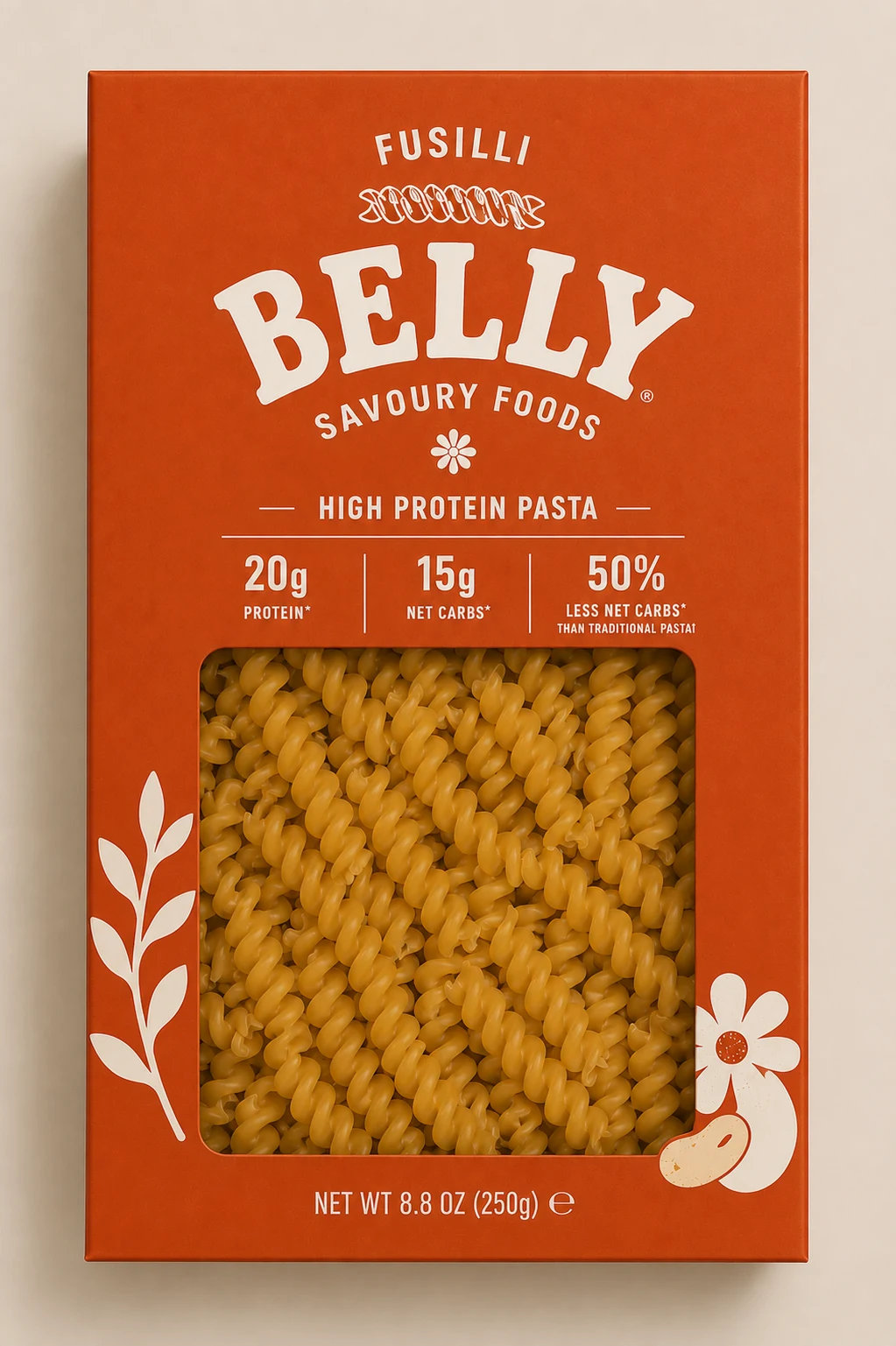
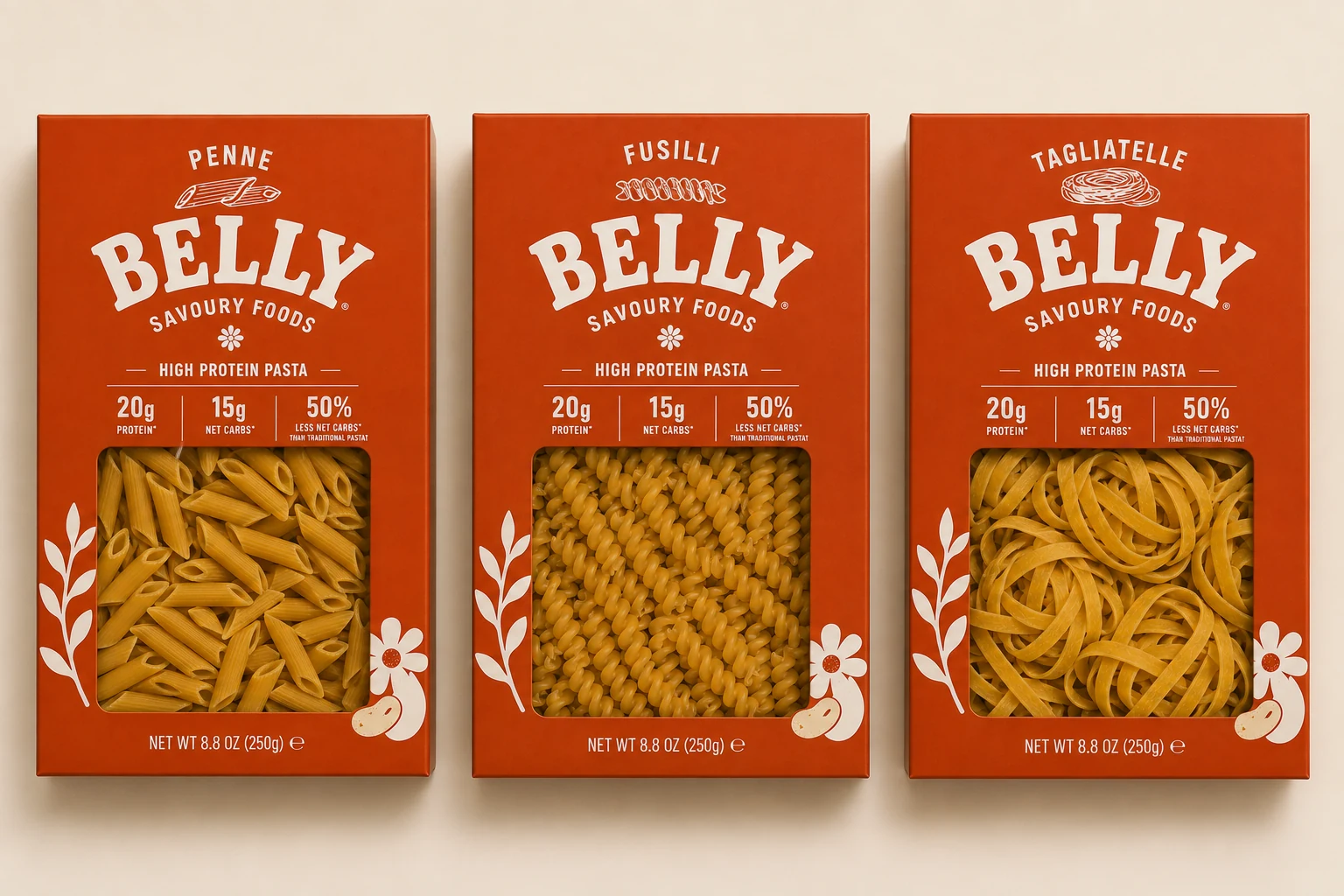
Fusilli carries the small pieces through its twists, but there is no need to abandon dinner if you have Penne instead. Follow the chosen shape’s pack instructions and toss gently so the pasta stays intact. The supplier specification we use for BELLY Fusilli lists 20 g protein per 100 g dry pasta. A 75 g dry portion therefore contributes 15 g protein from pasta alone. Peas and other ingredients need separate data before anyone can describe the whole meal’s macros. Our recipe is not a nutrition comparison with other brands.
06
Make swaps one at a time
Mint is the distinctive finish here; if you dislike it, leave it out for lemon and garlic pea pasta. A different fresh herb gives a different result rather than an identical substitute. Adding cheese changes the ingredients and allergens, so serve it separately and check the label. The base recipe contains no cheese or nuts, but BELLY Fusilli contains wheat, gluten and lupin and its ingredient list includes oat fibre. It is not gluten-free. Check the current pasta pack and every additional ingredient when cooking for someone with an allergy.
07
Plan the next bowl before putting away the pan
If you keep leftovers, cool and refrigerate them within two hours, use within 48 hours and reheat only once until steaming hot throughout. Follow any shorter use-by instructions. A little water can help loosen the coating during reheating, but the mint and pea texture will not be identical to a freshly finished bowl. The linked Food Standards Agency guidance provides the storage basis. This is an original editorial recipe, not a claim of kitchen testing or a measured food-waste reduction. For a chilled packed lunch, use our dedicated pasta-salad guidance instead.
Sources & checks
Sources checked 2026-10-19. Practical cooking suggestions are BELLY editorial guidance. Nutrition and food-storage facts are attributed to the sources below.