THE SHORT ANSWER
Should you use chopped or plum tomatoes for pasta sauce?
Either can work for a chunky sauce. Chopped tomatoes start in smaller pieces; whole peeled plum tomatoes let you break the pieces down yourself. Use the tin’s juice, simmer to the texture your recipe needs and add pasta water only if the finished coating needs loosening. There is no universal winner for every sauce.
- Use whole plum tomatoes for pieces you break down yourself, or chopped for smaller starting pieces.
- Keep the tin’s juice unless the recipe explicitly says to drain it.
- Reduce the sauce before deciding whether to add pasta water.
Start with the texture you want
Chopped tomatoes and whole peeled plum tomatoes can both make a useful pasta sauce. The difference starts with the pieces you put in the pan, not a rule that one tin always wins. Chopped tomatoes arrive as smaller pieces. Whole plum tomatoes let you break them down with your spoon and leave larger pieces if you want them. Napolina’s linked product pages describe chopped tomatoes as chunky and passata as a smoother format. Those manufacturer descriptions explain formats, not the results of a BELLY taste test. Decide whether you want visible tomato pieces before changing the rest of dinner.
Keep the juice with the tomatoes
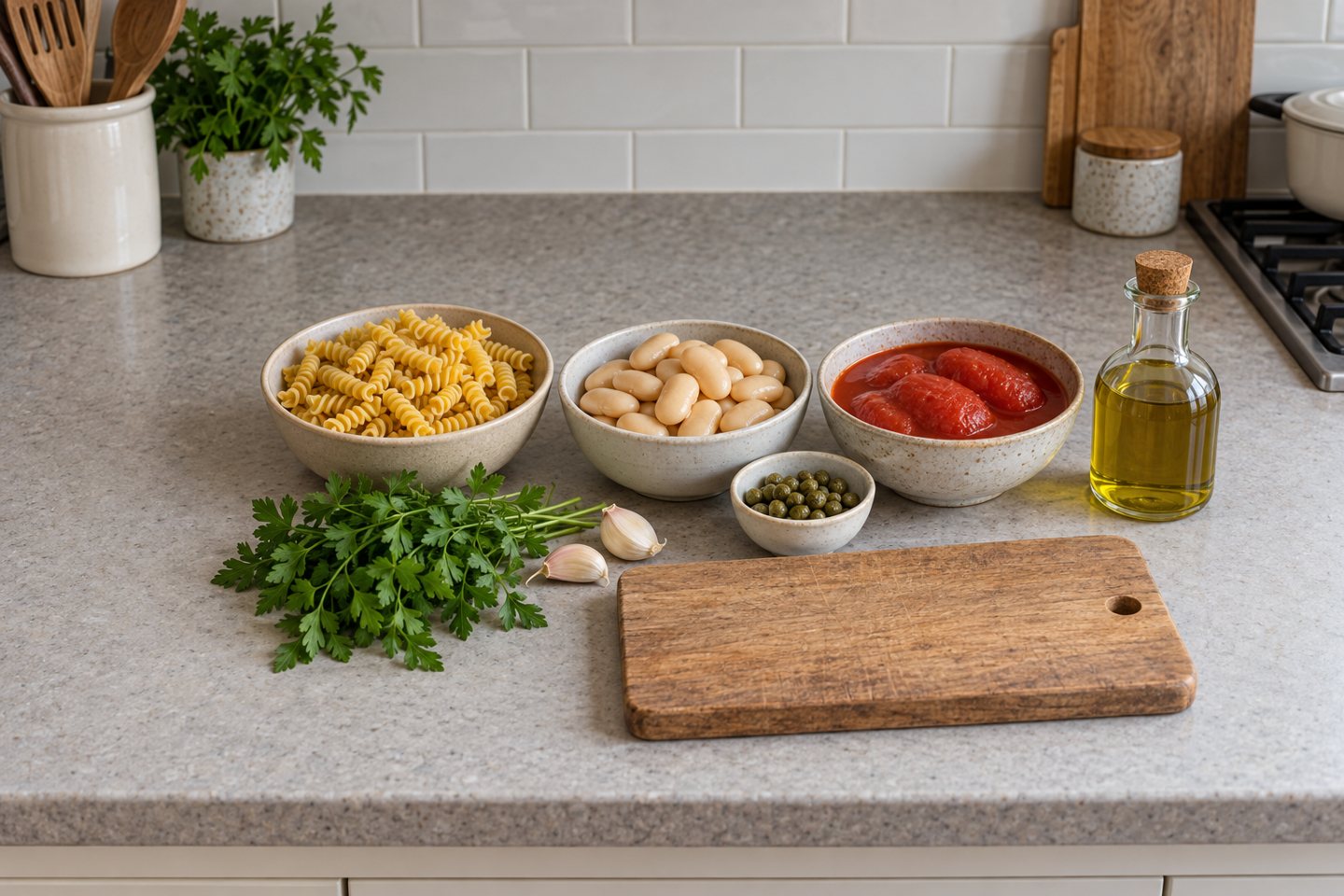
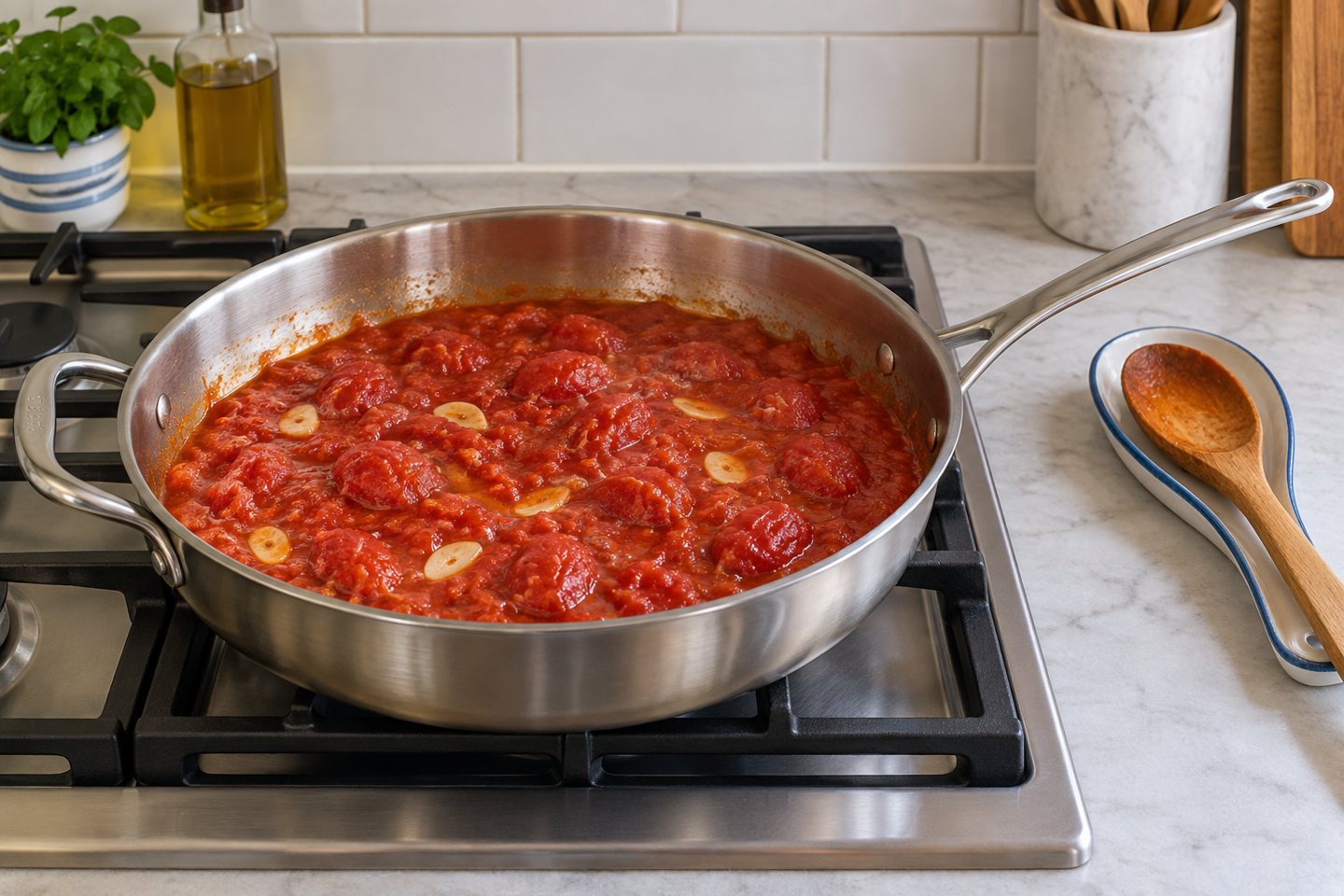
Our tomato, butter bean and caper Fusilli uses one 400 g tin of plain peeled plum tomatoes, including the juice. That total tin weight is a different instruction from weighing 400 g of drained tomatoes. Tip the contents carefully into the pan and break the whole tomatoes into rough pieces with a spoon. Keep the pan stable and take care with splashes. If you swap to a 400 g tin of chopped tomatoes, include its juice too. Read the ingredient list: a tin with garlic, herbs or seasoning already added is a change from the plain version used in our recipe.
Simmer for a coating, not a fixed promise
A wide pan and a gentle uncovered simmer help you see how the sauce changes. Our recipe gives an estimated 12–15-minute tomato simmer, with the beans and capers added near its end. That is a starting point for this method, not a universal minimum cooking time or safety rule for every tomato product. Look for softened pieces and a coating that does not immediately flood the plate. Stir occasionally and keep the heat low enough to avoid catching. A very wide pan, a crowded hob and different tins can all change how much adjustment is needed.
Add pasta water after checking the sauce
The reserved mug is useful insurance, not a requirement to dilute dinner. First reduce the tomatoes, warm the beans through and combine with the drained pasta. If the coating then needs loosening, add a tablespoon of pasta water and fold gently before deciding on another. You may not need any. If you have already made a loose sauce, pouring in the whole reserved amount will not make it cling more closely to the spirals. Watch the finished mixture instead of treating a measured reserve as an instruction to use it all.
A tin of beans is a separate ingredient decision
Butter beans bring larger pieces to this bowl. We use 240 g after draining and rinsing, which is why the recipe asks for drained weight rather than assuming every tin contains the same usable amount. Fold them into the sauce gently and heat them throughout before adding pasta. Cannellini beans can replace them at the same drained weight if that is what is in your cupboard. If you are specifically wondering about tinned lentils, use the separate lentil guide: they have a different size and are covered by their own recipe rather than being silently substituted here.
Leave final salt until the capers have joined in
The base recipe uses drained capers from a jar in brine or vinegar. They bring their own seasoning, so taste the combined sauce before adding salt. Weigh the stated amount after draining instead of including jar liquid in the measurement. Salt-packed capers are a different purchase and need their own packet preparation; do not treat them as a direct gram-for-gram addition. This is a tomato and bean dish with capers, not a claim to reproduce a traditional named sauce. No anchovies, olives, cheese or cream are hidden in the method or illustrations.
Compare dry pasta figures with dry pasta figures
BELLY’s owner-mapped Fusilli specification declares 20 g protein per 100 g dry pasta. The recipe divides 150 g dry pasta into two stated servings: that contributes 15 g protein from pasta per serving. It does not describe the total protein in the complete meal with beans and sauce. Do not compare that number with a cooked-weight pasta figure or assume it applies to a different brand. BELLY contains wheat, gluten and lupin; oat fibre is also part of its ingredients. Check every current ingredient label and cross-contact warning, including the caper jar.
Keep the useful next step close
Use the matching recipe for quantities, overlapping cooking steps and swaps. The recipe is original editorial development, not a kitchen-tested result, and generated serving and preparation images are labelled. BELLY is sold out, so you can cook tonight with an available pasta and follow its pack. For leftovers, cool and refrigerate within two hours, use within 48 hours and reheat once until steaming hot throughout, following shorter ingredient instructions where relevant. The Food Standards Agency source supplies the storage guidance. A useful pantry dinner starts with the tin you actually have, not an invented perfect cupboard.
Sources and editorial checks
Sources checked 24 October 2026. Practical cooking suggestions are BELLY editorial guidance. Nutrition and food-storage facts are attributed to the sources below.