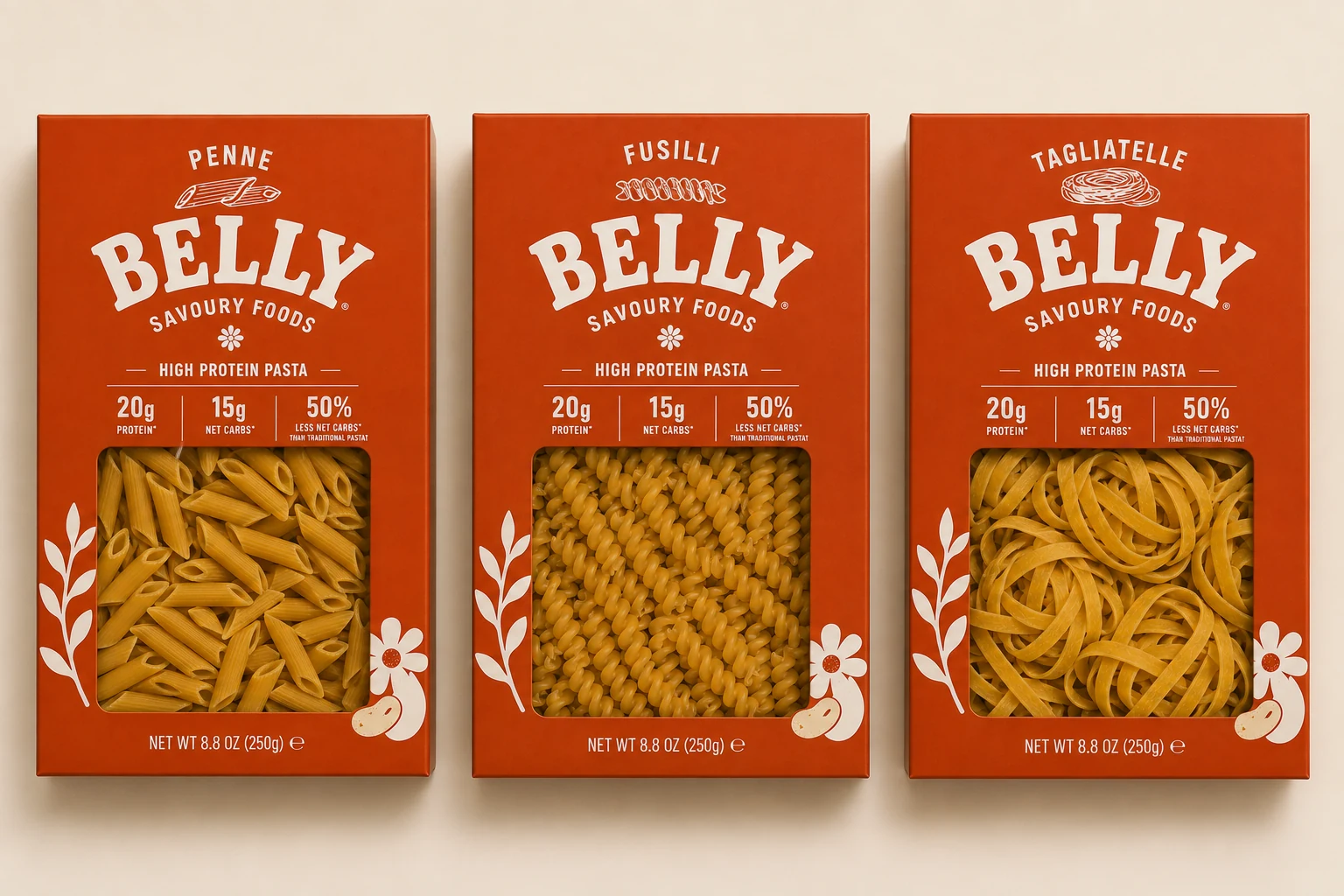
AI-generated ingredient illustration
By BELLY Editorial · Published
01
Start by reading the lentil label
Tinned lentils and dried lentils are different starting points. Napolina describes its tinned lentils as ready to use, without soaking or cooking first. Our tomato-lentil Fusilli recipe uses cooked brown or green lentils from a tin, drained and rinsed. Check your own tin for preparation and storage instructions. A bag of dried lentils needs a method written for it; do not tip the same weight into this sauce and expect the timing or liquid to work. The first useful cooking decision happens before the pan is even hot.
02
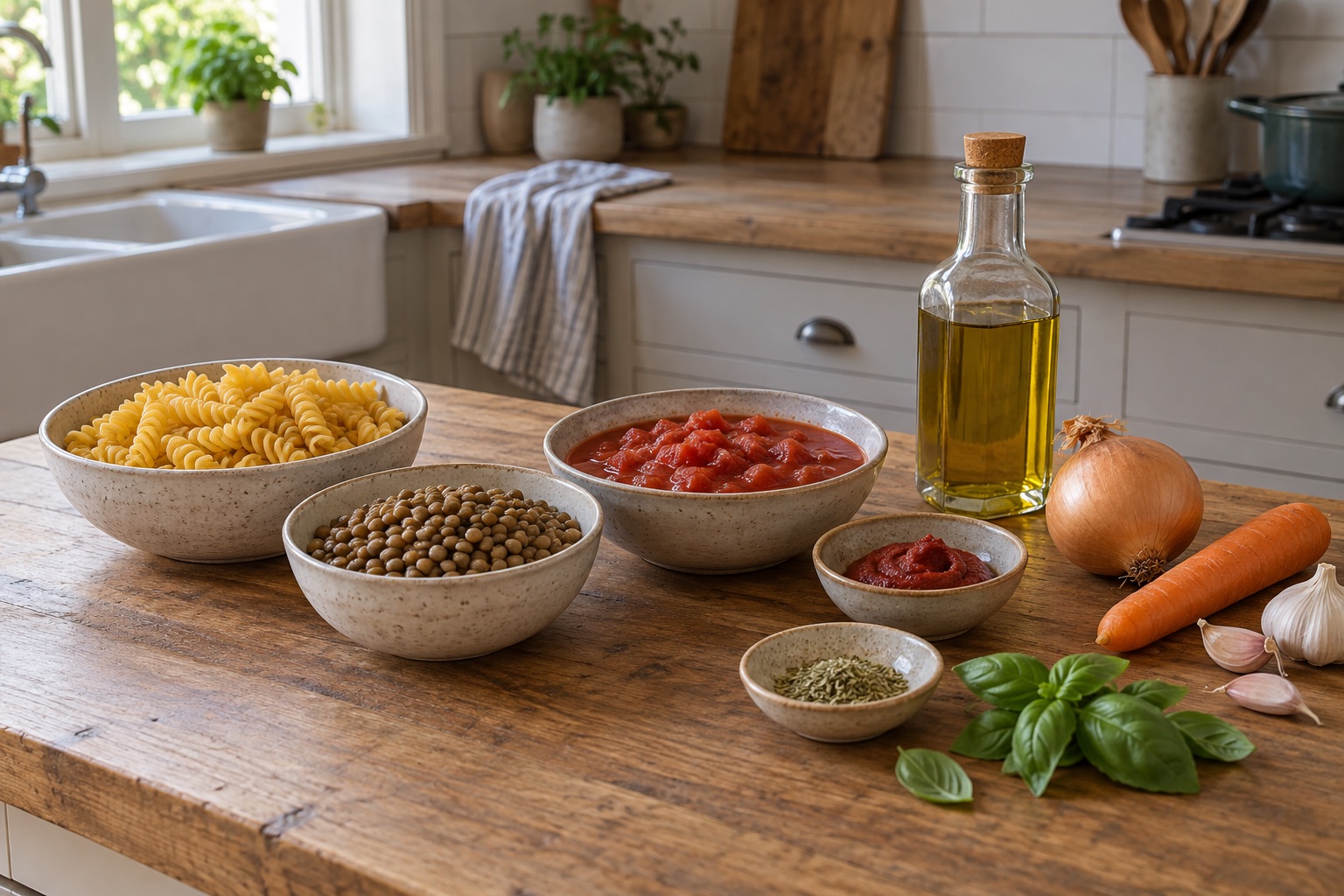
Build a small, useful cupboard list
For this dinner, the lasting ingredients are pasta, a tin of lentils, a tin of tomatoes, tomato purée, olive oil and dried oregano. Onion, carrot and garlic make the base, with basil as an optional finish. Keep that list somewhere you can actually see it when shopping. Before buying duplicates, check which tins you already have and whether the pasta amount will cover the people eating. This is a practical pantry idea, not a fixed-price meal claim: prices and pack sizes vary. Use ingredients you enjoy rather than collecting every possible sauce addition.
03
Give the vegetables a head start
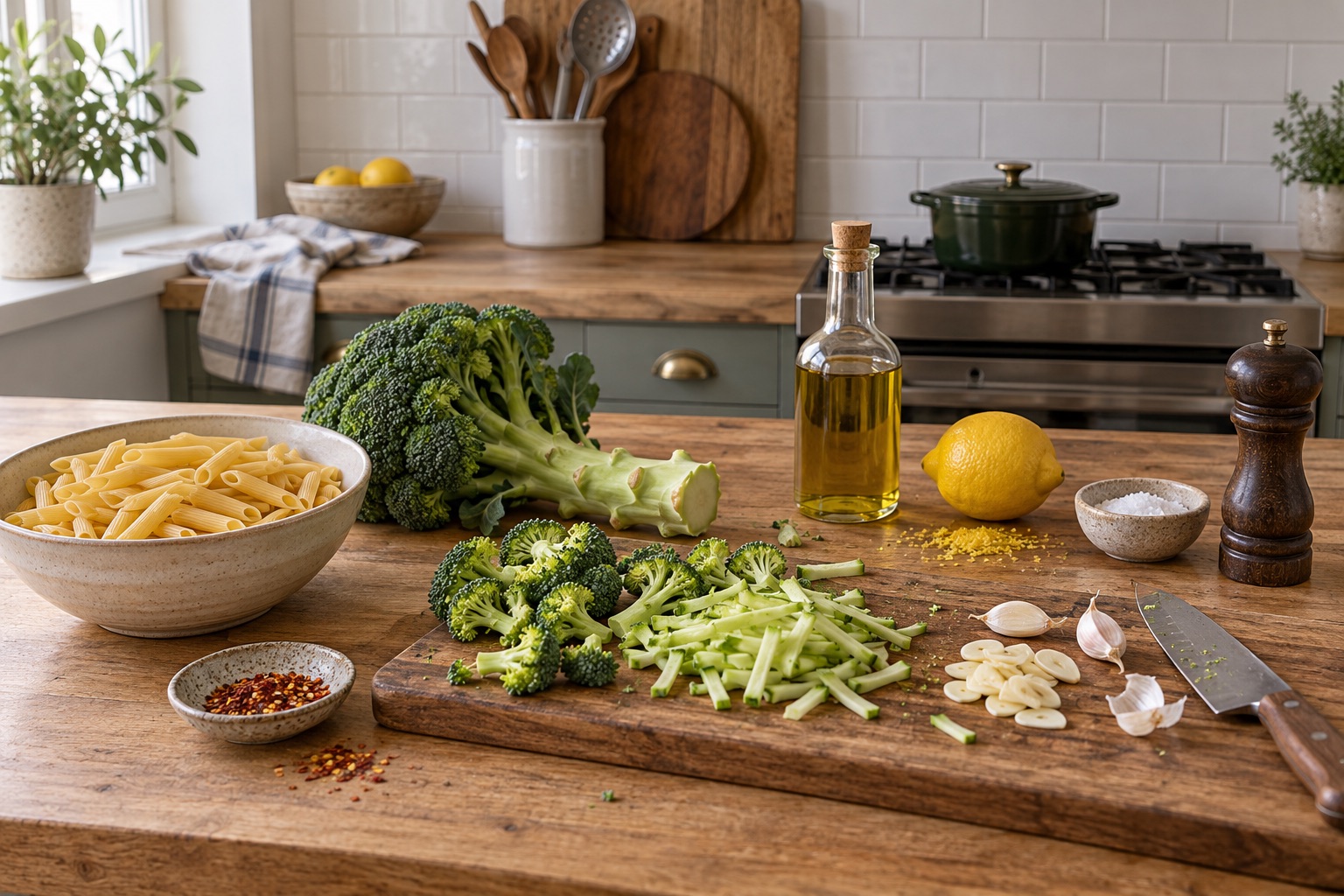
Chop the onion and carrot finely enough that they can soften before the pasta is ready. Big carrot chunks create a different dinner and need more time. Start them in the oil, stirring occasionally, then add garlic and tomato purée briefly before the chopped tomatoes. You are building a tomato sauce with lentils, not asking the lentils to supply all the flavour. Choose a pan large enough to stir without splashing. While the sauce simmers, wash the chopping board and get the pasta pan ready so the last few minutes feel manageable.
04
Judge the sauce before the pasta goes in
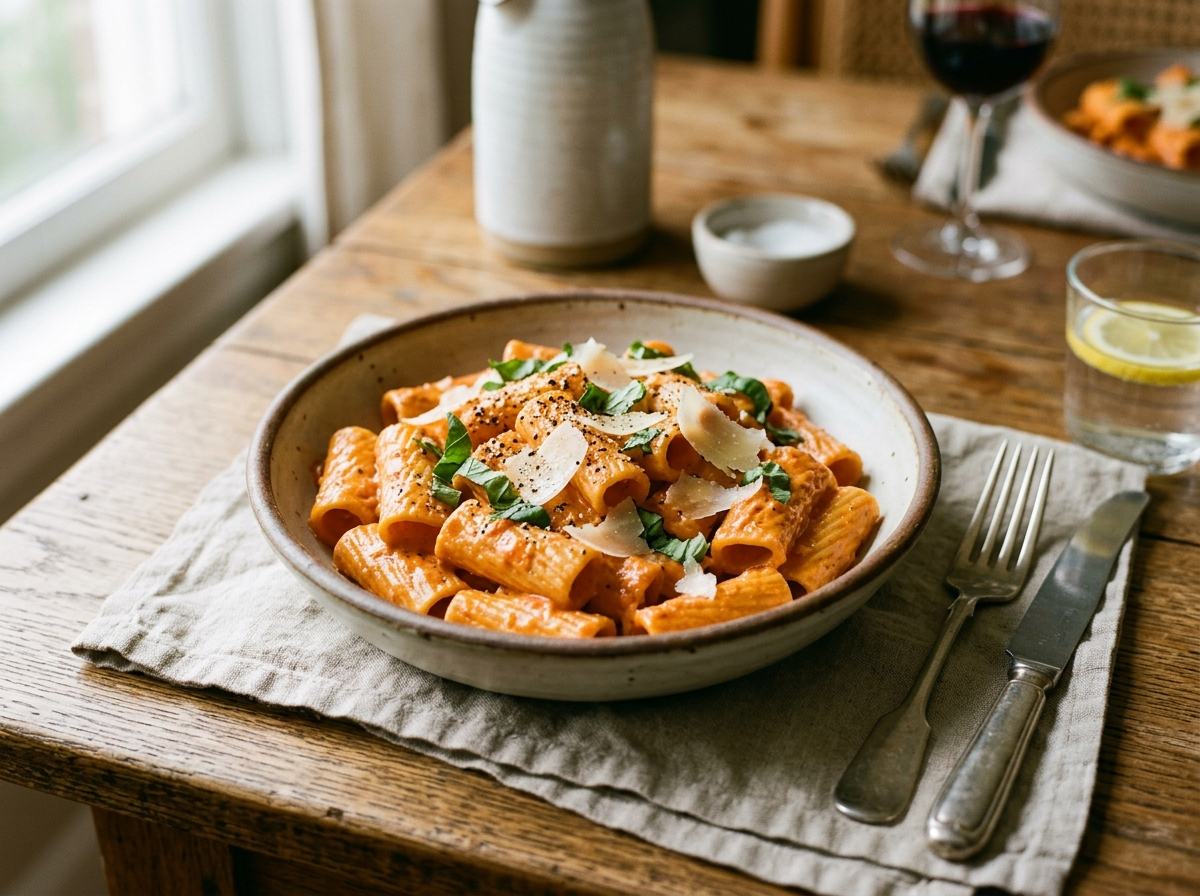
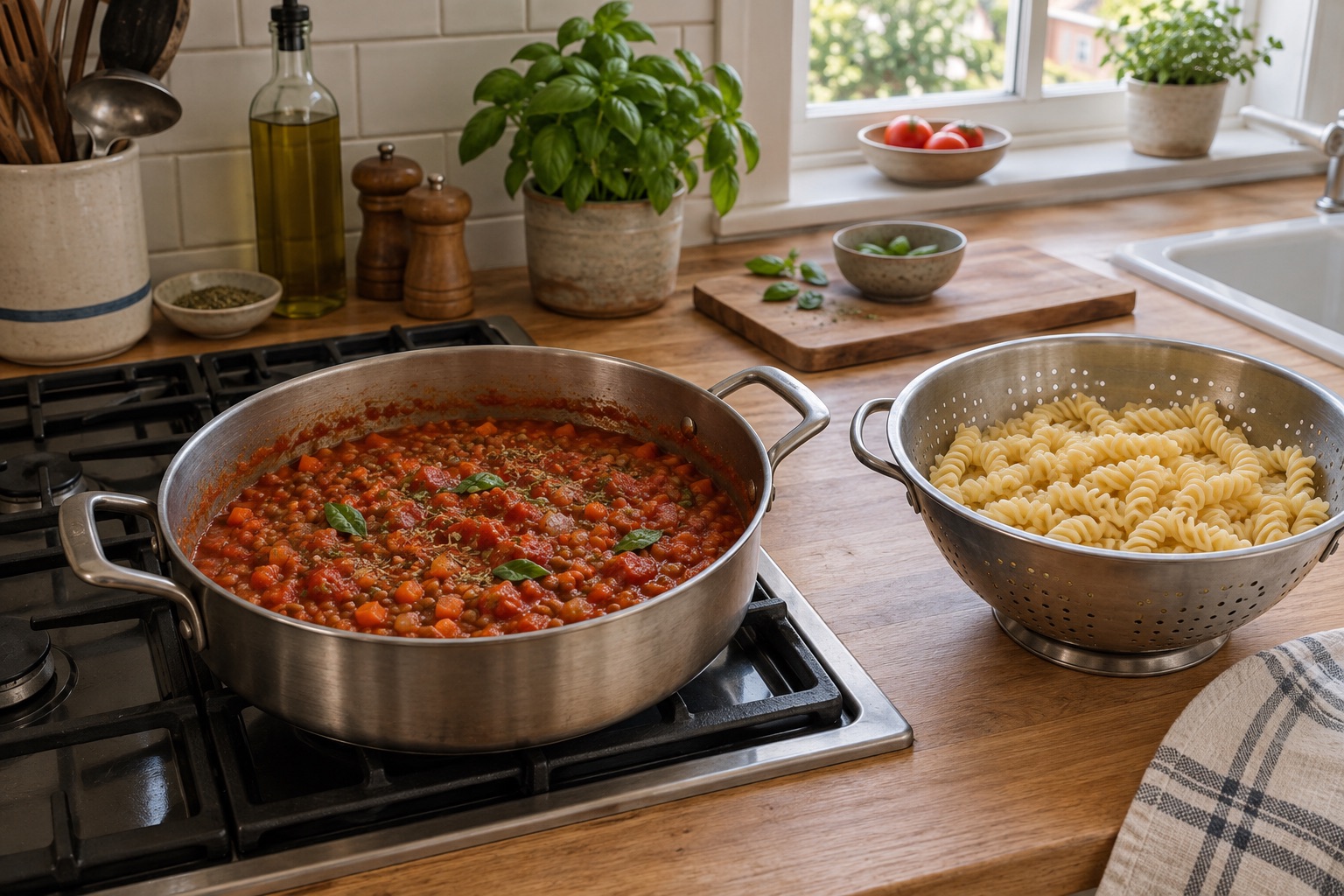
Look at the sauce after adding the drained lentils. You want something that moves when stirred and can coat the Fusilli, with visible lentils rather than a dense paste. If it is very thick, add a small splash of water and stir; if watery, simmer gently uncovered before mixing with the pasta. Different tins of tomatoes and different pans can give different results, so the recipe timing is a guide. Keep the heat controlled and stir the bottom of the pan. Taste a cooled spoonful before deciding what seasoning it needs.
05
Keep the pasta job separate
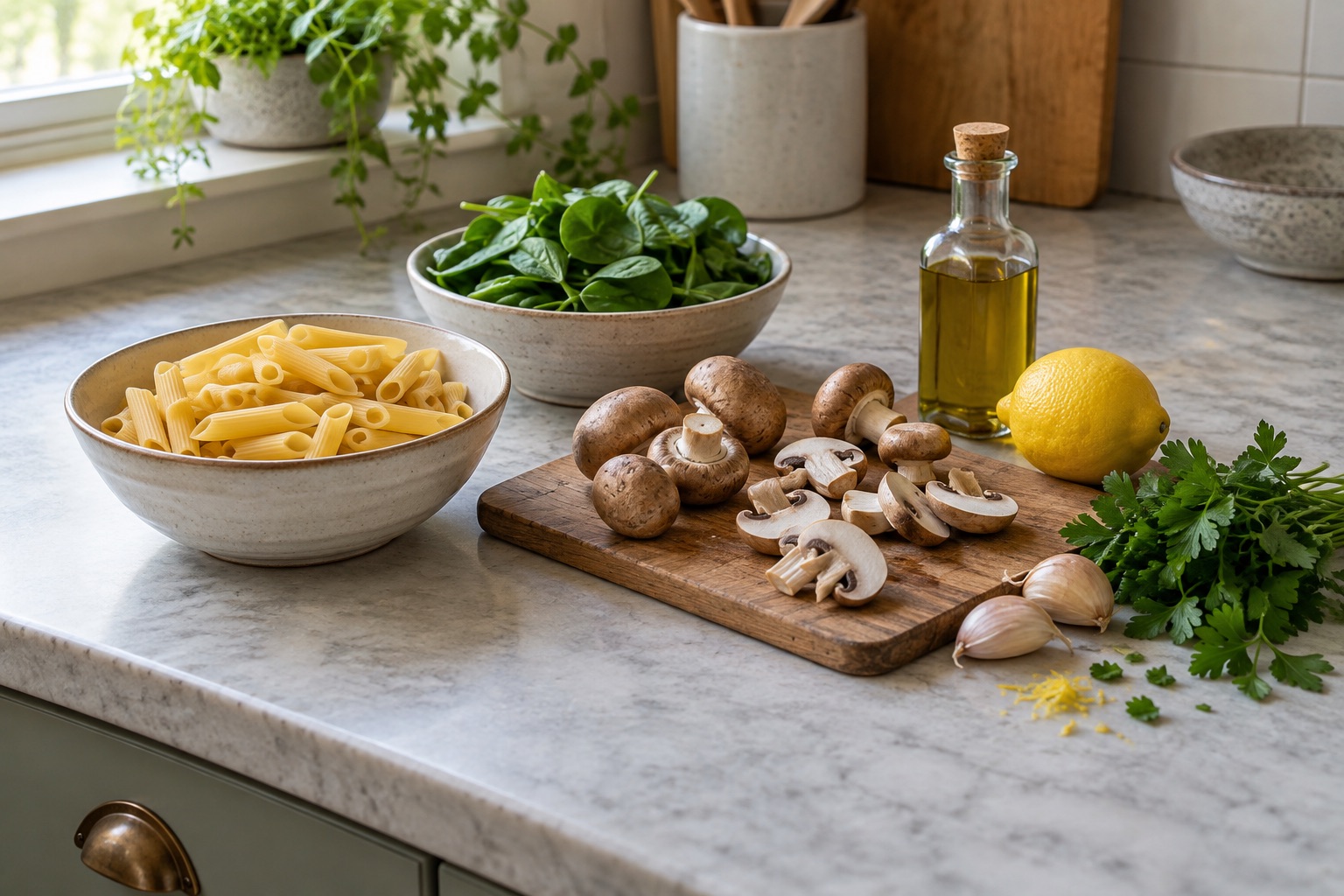
Cook the Fusilli according to its pack instructions while the sauce finishes. Keeping the two pans separate lets you check the pasta texture without having to guess how much liquid the whole dish will absorb. Reserve a little pasta water before draining, then bring pasta and sauce together gently. Add only what you need to loosen the coating. If you prefer a bowl with mushrooms and greens, follow our mushroom Penne recipe instead; it has a different order of work and a lighter finish. There is room for both in a week of pasta dinners.
06
Change one thing at a time
Penne can stand in for Fusilli if that is what you have: follow its own cooking instructions. A cooked lentil pouch may also be useful, but choose plain lentils and check the drained or ready-to-use quantity, seasoning and allergens before substituting. A flavoured pouch can change the whole sauce. Fresh basil is a finishing option, not a reason to abandon dinner when the plant is bare. Cheese or other toppings should be offered deliberately, with their labels checked; they change the ingredients and may change suitability for vegetarian diners.
07
Name what the nutrition number covers
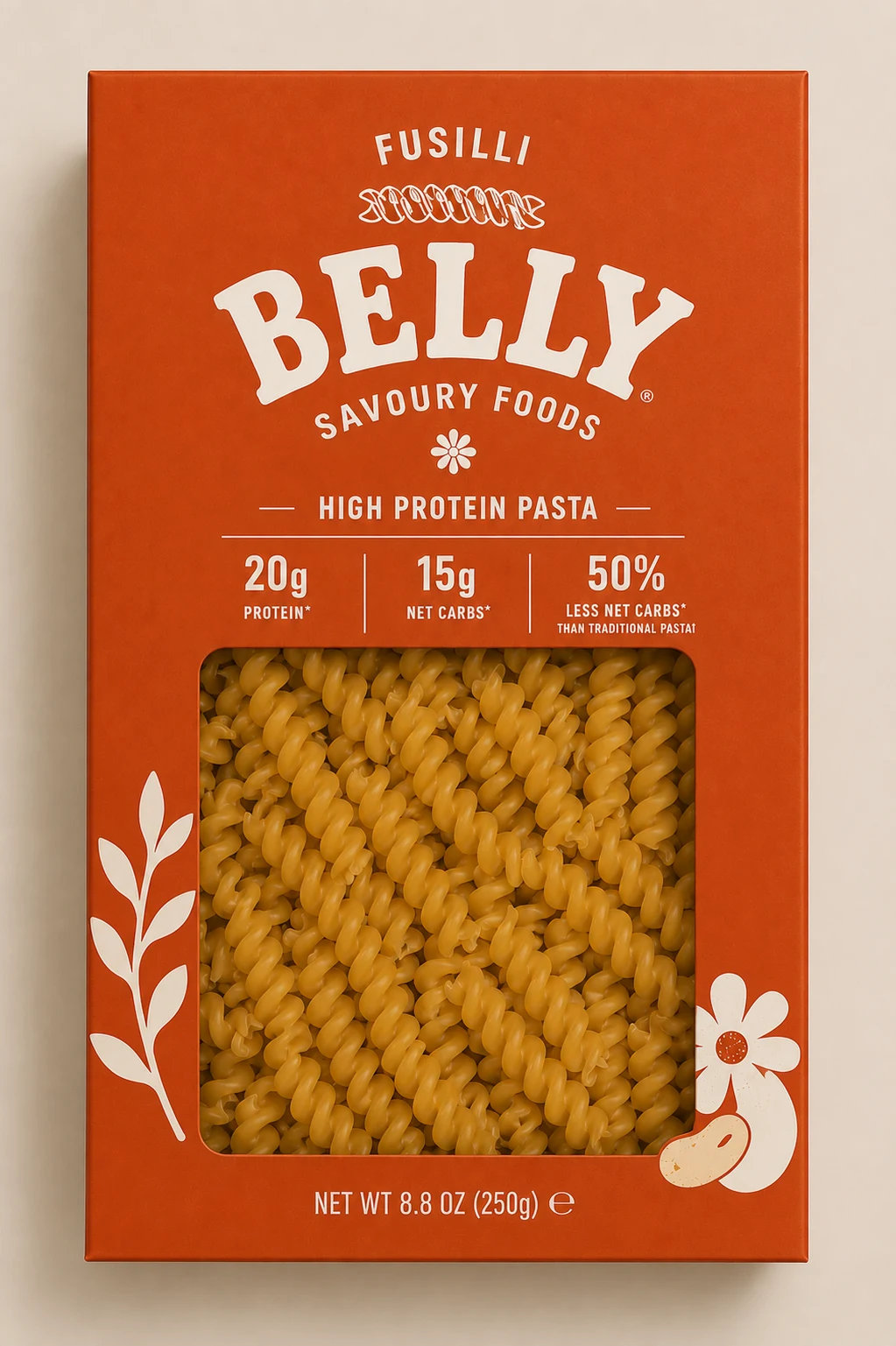
Our recipe uses 150g dry BELLY Fusilli for two servings. At the supplier’s 20g protein per 100g dry figure, that is 15g protein from pasta alone per serving. The lentils and other ingredients are additional, and we have not established complete meal macros. BELLY Fusilli contains wheat, gluten and lupin, and its supplier lists oat fibre too. Check the current pack and all other ingredient labels. For another portion size, use the dry-pasta calculator rather than applying the dry panel to cooked weight.
08
Plan the next bowl before packing leftovers
If keeping leftovers, Food Standards Agency guidance is to cool and refrigerate cooked food within two hours, use it within 48 hours or freeze it, and reheat only once until steaming hot throughout. Follow shorter ingredient use-by dates too. Portion leftovers into suitable containers rather than leaving a deep pan on the hob. Keep a clear date so tomorrow’s dinner does not become a guessing game. BELLY Fusilli is sold out for now; its comeback list records your interest without an order or payment, separately from newsletter signup.
Sources & checks
Sources checked 2026-10-16. Practical cooking suggestions are BELLY editorial guidance. Nutrition and food-storage facts are attributed to the sources below.