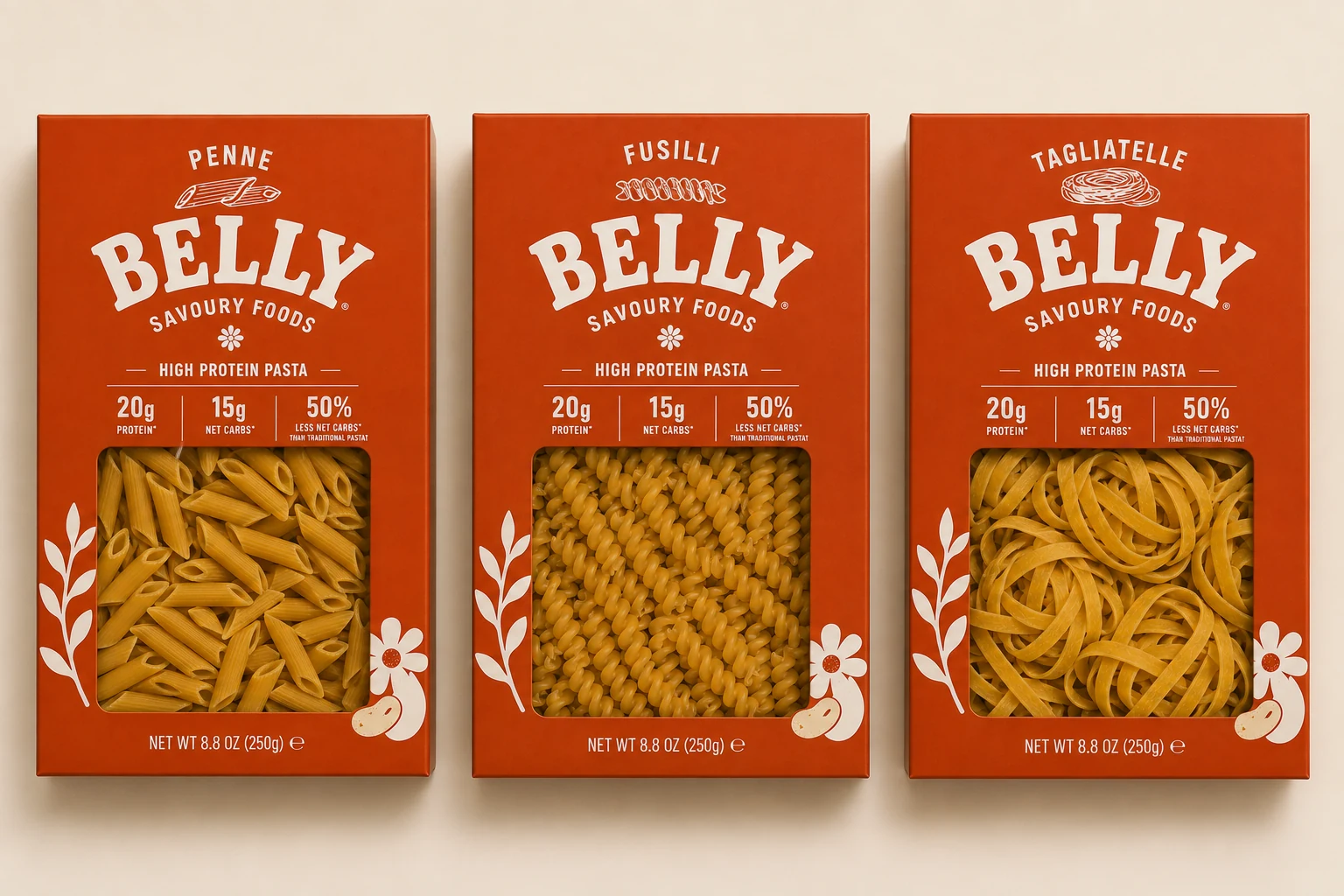
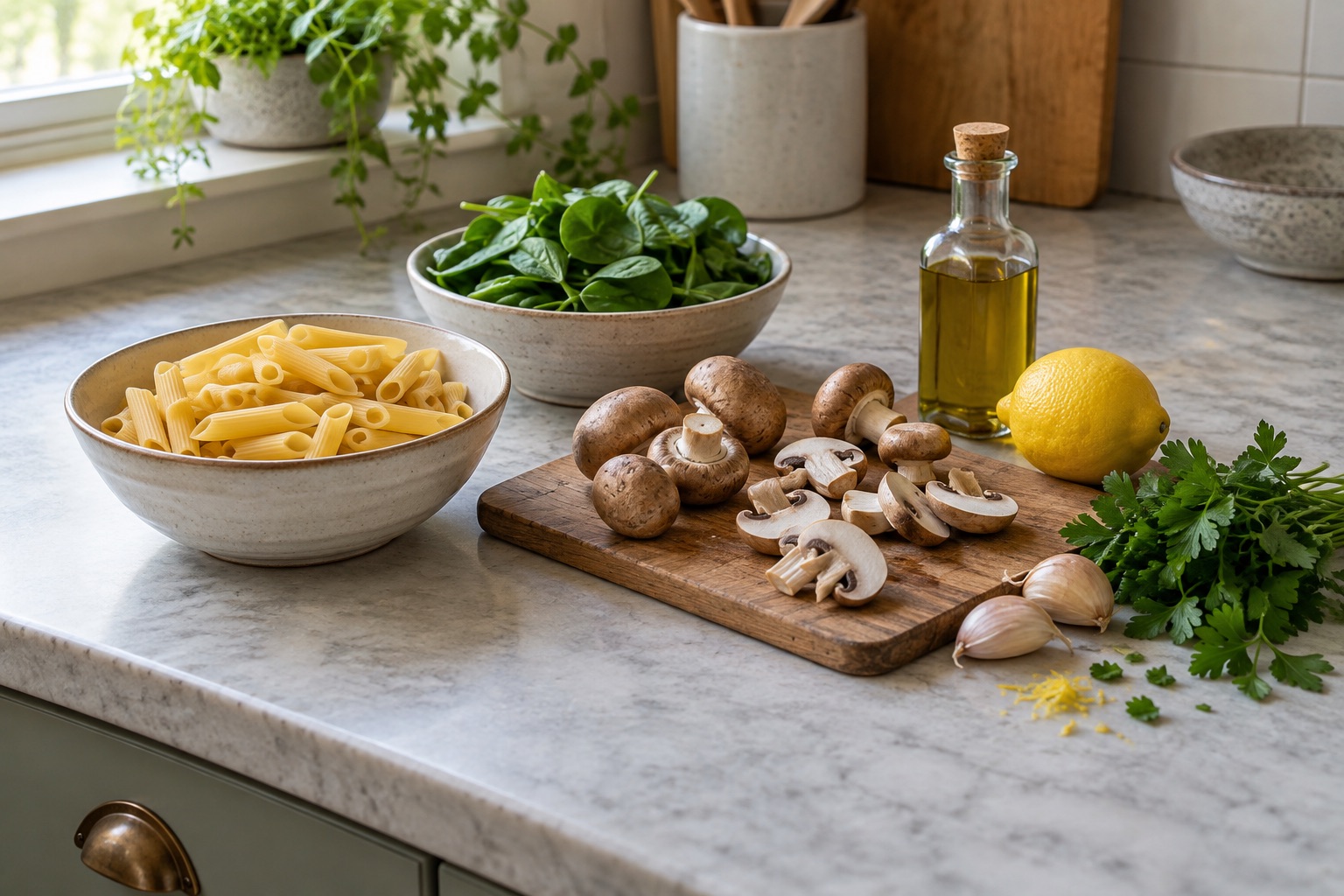
AI-generated ingredient illustration
By BELLY Editorial · Published
01
Choose the sort of dinner you want
Mushroom pasta can mean a rich cream sauce, a tomato-based bowl or a lighter coating of olive oil, garlic and cooking water. Decide which you want before shopping. For our mushroom and spinach Penne, the mushrooms stay visible and the sauce lightly coats the pasta; it is not intended to imitate a thick cream sauce. That distinction makes the recipe easier to follow and avoids adding more and more liquid while chasing a different dish. Start with the complete recipe if you want quantities, then use this guide to make decisions about equipment, timing and toppings.
02
Give the mushrooms their own moment
Use shop-bought chestnut or button mushrooms, clean away dirt and cut them into similar-sized slices. Good Food recommends leaving space between mushrooms in the pan and cooking in a single layer so they can brown rather than steam. If your pan is small, cook two batches. This is the point to slow down slightly: spinach and pasta can wait while the mushrooms cook. Add the garlic later, at a lower heat, so it does not spend the whole mushroom-cooking time in the pan.
03
Set up for a calm finish
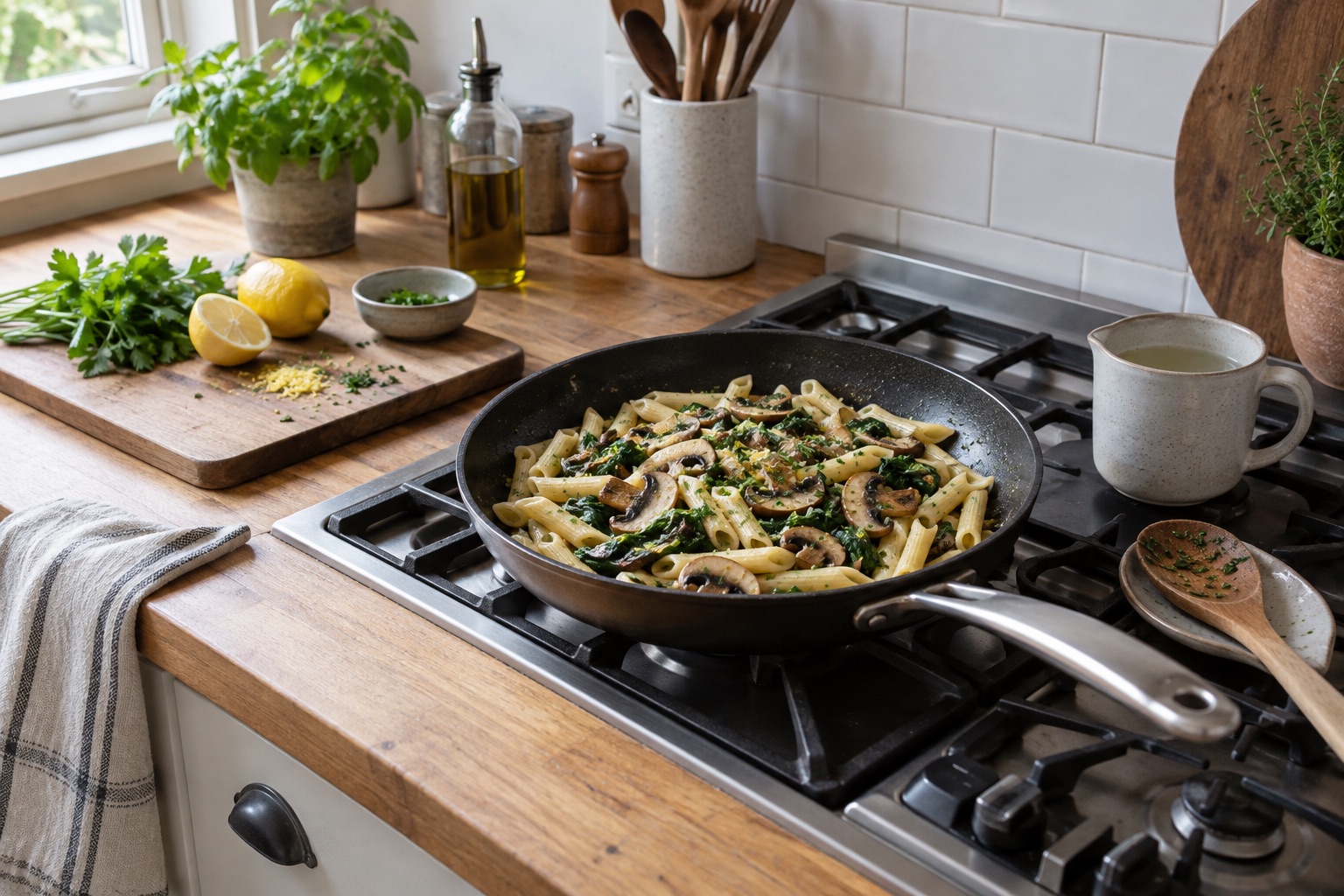
Before the pasta goes into its water, have a colander ready, a mug for reserved cooking water and the finishing ingredients beside the hob. Wash and dry the spinach, chop the parsley and grate the lemon zest. Choose a frying pan with room for both the cooked vegetables and pasta; a crowded pan is awkward to stir without spilling dinner. If you are cooking for more people, check the pan size before simply doubling everything. Two manageable pans may be easier than one overflowing pan. The aim is a short final assembly with everything within reach.
04
Keep greens and finishing flavours separate
Baby spinach is convenient because the leaves can go into the pan near the end. Frozen spinach is a different ingredient: follow its pack cooking instructions and deal with excess liquid before combining it with the pasta. Do not assume the same weight or timing is interchangeable. Lemon zest and juice do different jobs in this bowl. Add zest for its aroma, then taste before adding more juice. Keep a little chopped parsley for serving if you like a fresh finish. An extra spoonful of sauce is optional; balancing what is already in the pan comes first.
05
Use cooking water with a purpose
Keep some pasta cooking water before draining and add a small amount when you combine the Penne with the vegetables. Stir and look at the coating before adding another splash. The aim here is a light, moist finish, not a pool at the bottom of the bowl. Our existing pasta-water guide explains this step in more detail. Follow the timing on your actual pasta pack and check the texture; there is no single cooking time that works for every protein pasta. Serve promptly once the coating and pasta are how you want them.
06
Make swaps that fit the whole bowl
If you have Fusilli instead of Penne, follow its own pack instructions and keep the mushroom pieces easy to pick up alongside it. If you would rather have a tomato or red-pepper sauce, choose a recipe designed for that instead of adding it on top of everything here. Cheese can be offered separately, but it changes the allergens and the character of the dish; check whether a chosen cheese suits vegetarian diners. The base recipe uses no cream or cheese. That does not make it gluten-free: BELLY pasta contains wheat, gluten and lupin. Always check the labels of every ingredient you use.
07
Keep the protein claim specific
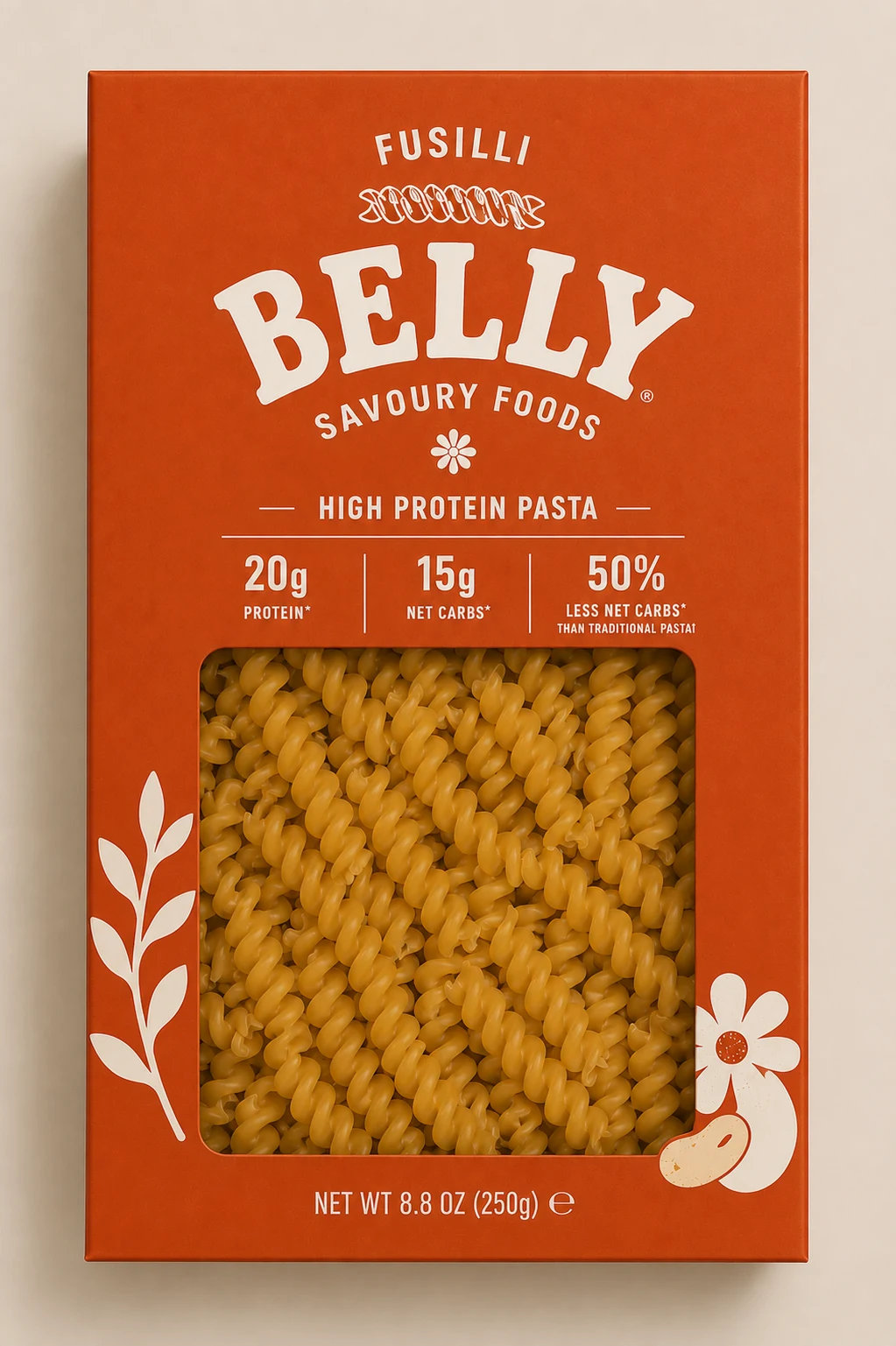
The supplier lists 20g protein per 100g dry Penne. Our two-serving recipe uses 150g dry pasta, giving 15g protein from pasta alone per serving. That is not a total for the mushroom dish, and cooked pasta weight should not be substituted into a dry-weight calculation. The portion calculator is there if you want to change the dry pasta amount. BELLY Penne is currently sold out; register your interest in the next drop while you plan future pasta nights. No order or payment is taken, and a restock registration is separate from newsletter consent.
Sources & checks
Sources checked 2026-10-15. Practical cooking suggestions are BELLY editorial guidance. Nutrition and food-storage facts are attributed to the sources below.