THE SHORT ANSWER
How do you stop courgette pasta turning watery?
Cook the courgettes in uncrowded batches until tender and their released liquid is no longer pooling. Add the cooked pasta, then use reserved pasta water in small amounts only if the coating needs loosening. This is BELLY editorial cooking guidance, not a tested guarantee.
- Cook courgettes in uncrowded batches before adding pasta.
- Add sliced garlic after lowering the heat.
- Start with two tablespoons of pasta water, then adjust.
Why does courgette pasta turn watery?
Courgettes can release liquid while they cook. If that liquid is still pooling when the drained pasta arrives, another generous splash from the pasta pan can leave dinner swimming. Start by looking at the frying pan rather than reaching for a thickener. Our approach is to cook the sliced courgettes before combining the dish, then add reserved cooking water only when the coating needs it. Good Food’s linked courgette method also cooks off vegetable water before adding its pasta liquid; it uses a different recipe and is a technique reference, not evidence that our recipe has been tested.
Choose slices that suit the dinner
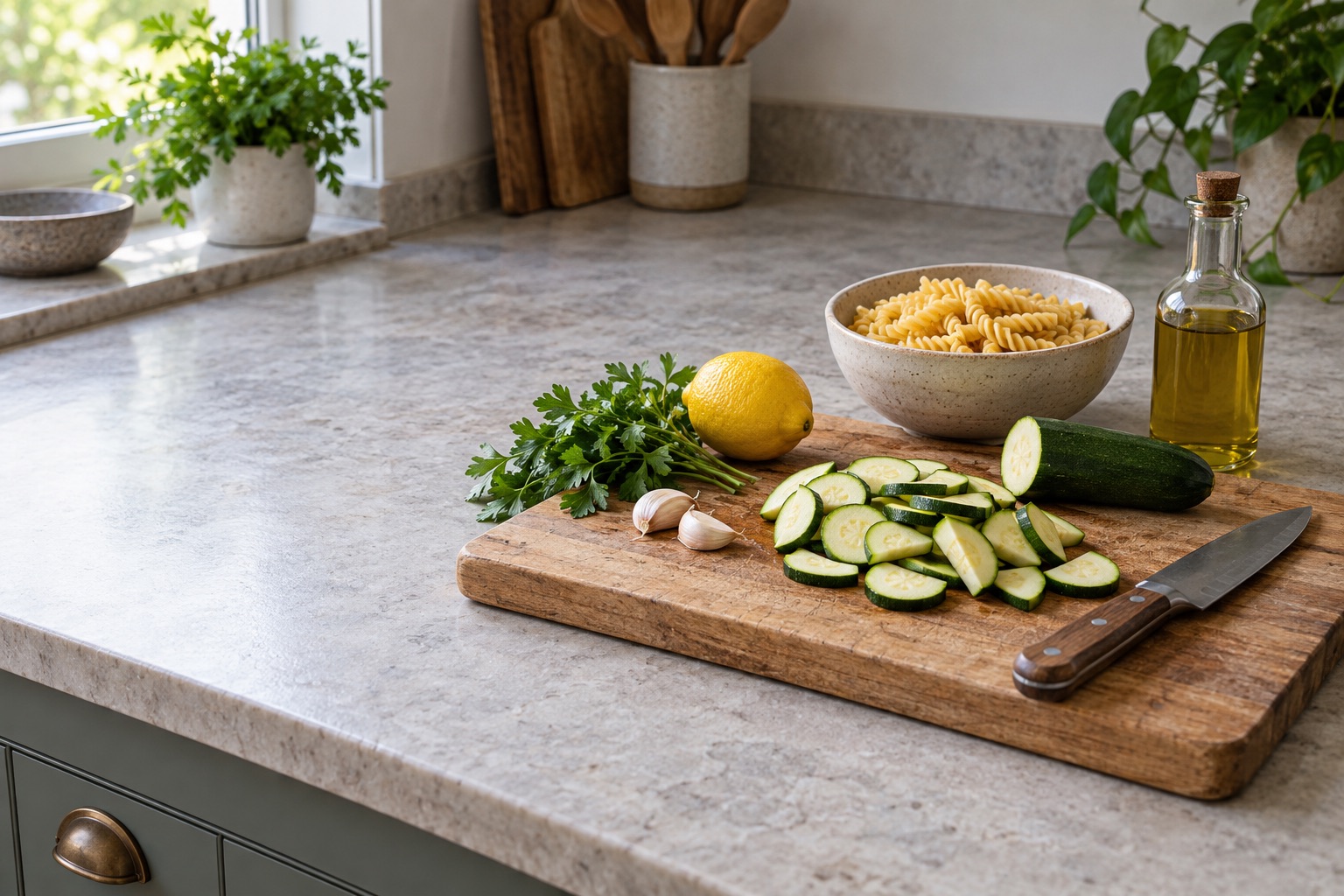
For this bowl, cut courgettes into half-moons about 4 mm thick so you can keep recognisable pieces among the Fusilli. Grated courgette makes a different sort of coating and should be treated as a deliberate change rather than an identical shortcut. Weigh the courgettes after trimming and pat the slices dry with a clean towel. This removes surface moisture; it does not remove all the water inside the vegetable. There is no need to promise a perfectly crisp result. The aim is tender pieces with a little colour and a lightly coated pasta.
Give each batch room
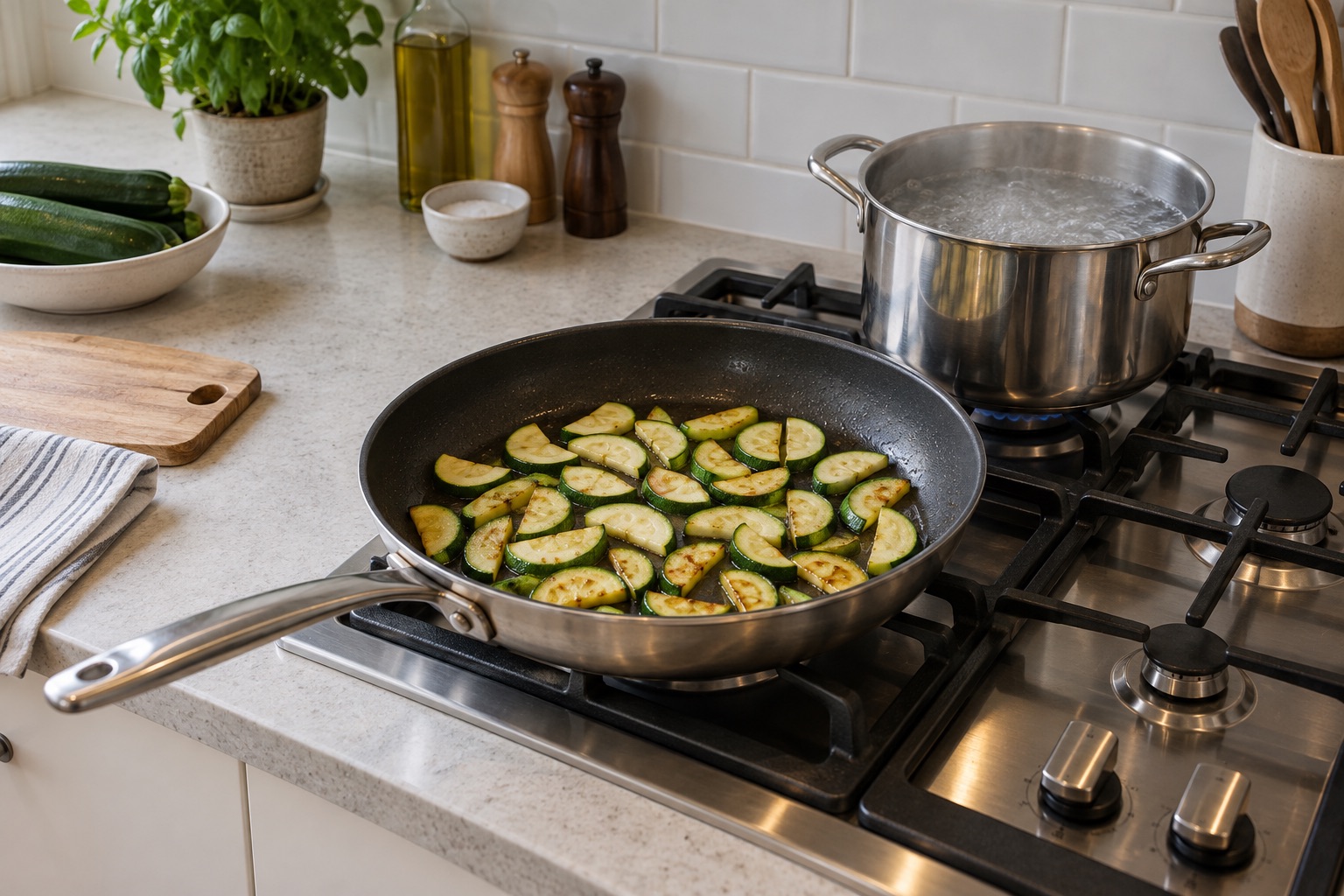
A wide pan is helpful, but its usable base matters more than the number written on the packaging. Start with half the courgettes in a loose single layer and move the first batch into a bowl before cooking the second. If your slices are piled up, use another batch and allow more time. Leave a little space between pieces and turn them occasionally. Watch the courgettes and the liquid in the pan: a fixed timer cannot account for every hob. Our timings are estimates for an editorial recipe, not measured kitchen-test results.
Keep the garlic out of the high-heat stage
Thin garlic slices need a different treatment from courgettes that are taking on colour. Add the garlic only after reducing the heat near the end of the second batch. Stir briefly until fragrant, then return the first batch of courgettes. This gives the garlic a shorter, gentler turn in the pan. If it begins colouring rapidly, lower the heat further. Prepare the lemon and parsley before this point so you can finish the bowl without leaving the garlic unattended. The recipe uses olive oil for the coating and includes no cream or cheese.
Treat pasta water as an adjustment
Keep a mug of pasta cooking water before draining, then start with just two tablespoons in the courgette pan. Toss the pasta gently and decide whether it needs another spoonful. A large reserved amount is a safety margin, not an instruction to pour it all in. If the vegetables are already sitting in liquid, hold off. If the coating is too tight, loosen it gradually. Follow the pasta’s own pack timing: using a different shape or brand may change when you need to start the second pan. The linked recipe sets out the overlapping steps.
Finish the lemon after the heat
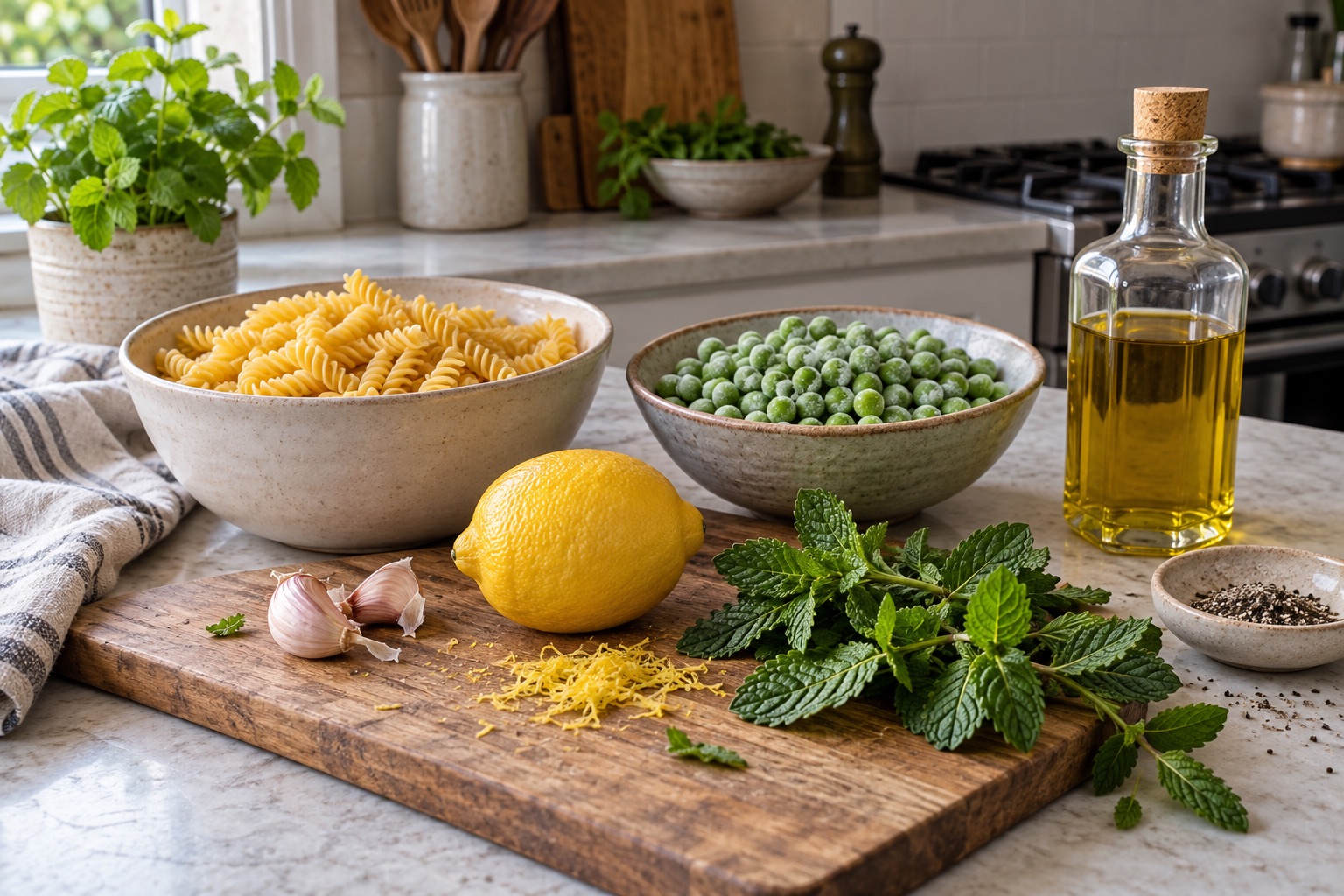
Zest the lemon before cutting it, taking the coloured surface rather than digging into the white pith. Remove the pasta pan from the heat before folding in the zest, parsley and a measured tablespoon of juice. Taste before adding more. Lemons vary, and a whole lemon’s juice can be more than this light coating needs. Keep the ingredient list clear when making swaps: cheese adds another flavour and changes allergens; pesto introduces a different sauce with its own label to check. Neither is part of the original bowl pictured here.
What protein figure belongs on this bowl?
The supplier specification identified by BELLY’s owner lists 20 g protein per 100 g dry Fusilli. Our recipe uses 150 g dry pasta for two stated servings. The pasta component therefore supplies 15 g protein per serving by arithmetic: 20 × 75 ÷ 100. This is not the protein total for the completed meal, and it is not a personalised portion recommendation. BELLY contains wheat, gluten and lupin; its ingredients include oat fibre. An available alternative pasta can make dinner while BELLY is sold out, but its own label supplies its nutrition figures.
Make the next step a useful one
Use the complete lemon, garlic and courgette Fusilli recipe for quantities, timings and the method in order. If you keep leftovers, cool and refrigerate them within two hours, use within 48 hours and reheat once only until steaming hot throughout, following shorter ingredient instructions where relevant. The Food Standards Agency source below provides that storage basis. This guide and its recipe are original editorial developments and have not been kitchen-tested. Images are labelled AI-generated illustrations. For product evidence and our editorial approach, visit the press and sources room.
Sources and editorial checks
Sources checked 20 October 2026. Practical cooking suggestions are BELLY editorial guidance. Nutrition and food-storage facts are attributed to the sources below.