THE SHORT ANSWER
How do you make butternut squash pasta sauce without a blender?
Roast prepared squash until fork-soft, then mash about half with a measured amount of reserved pasta water. Fold in the pasta and remaining squash pieces for a coarse coating. It will not have the same smoothness as a blended sauce; no cream is needed for this method.
- Weigh squash after peeling and deseeding.
- Roast until the pieces mash easily with a fork.
- Mash half and add pasta water gradually; keep the rest as cubes.
Can butternut squash become pasta sauce without a blender?
A blender and a fork make different sauces. A blender breaks the squash into a smoother purée; a fork leaves small pieces, so the result is better described as a coarse coating. Our approach is to roast the squash until properly soft, mash about half in the pan and keep the rest as pieces among the Penne. That gives you a useful choice before dinner starts: if you want a completely smooth finish, follow a recipe written for blending. If you like texture, you can put the blender away. Neither approach needs to be described as a substitute for every cream sauce.
Weigh prepared squash, not the whole vegetable
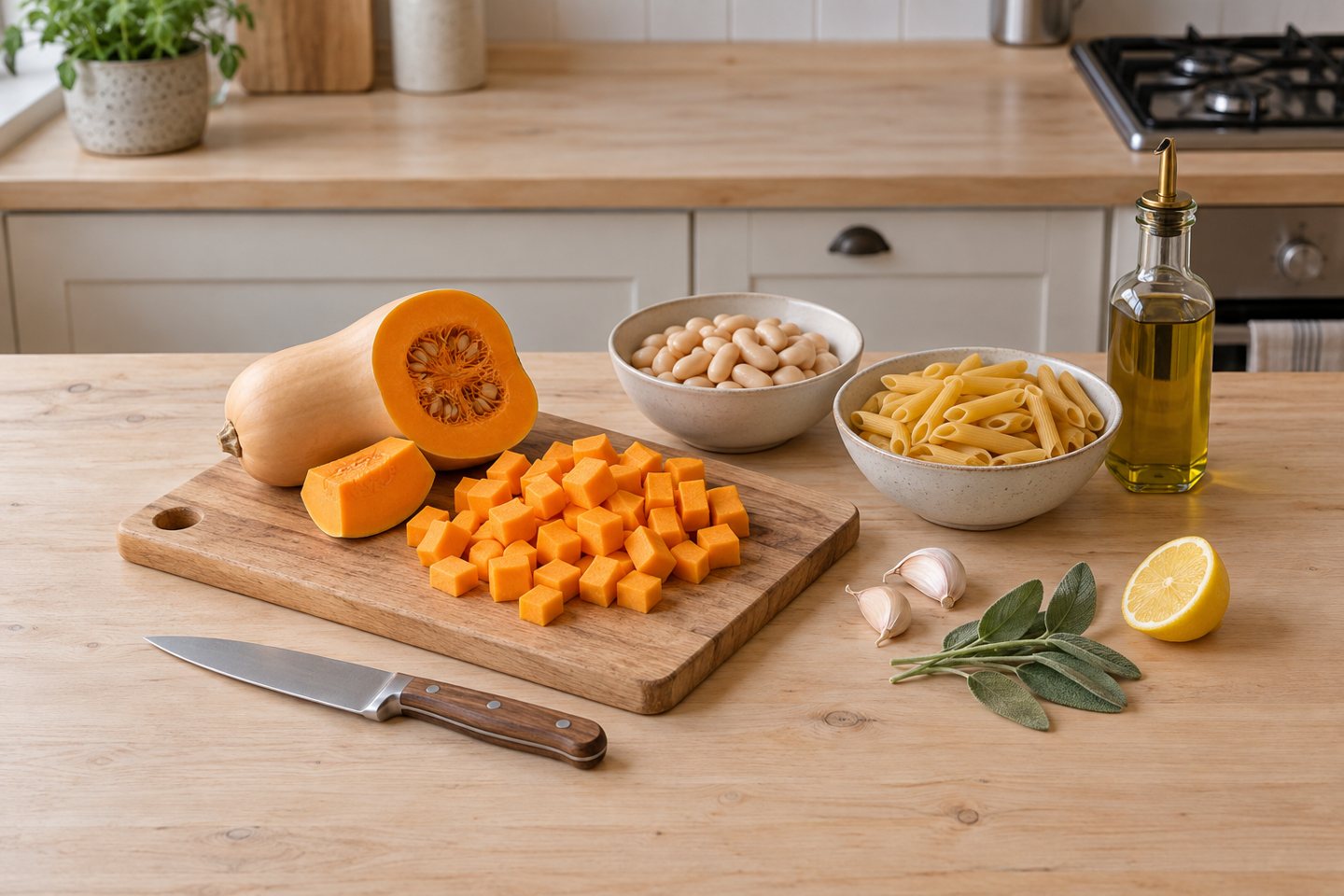
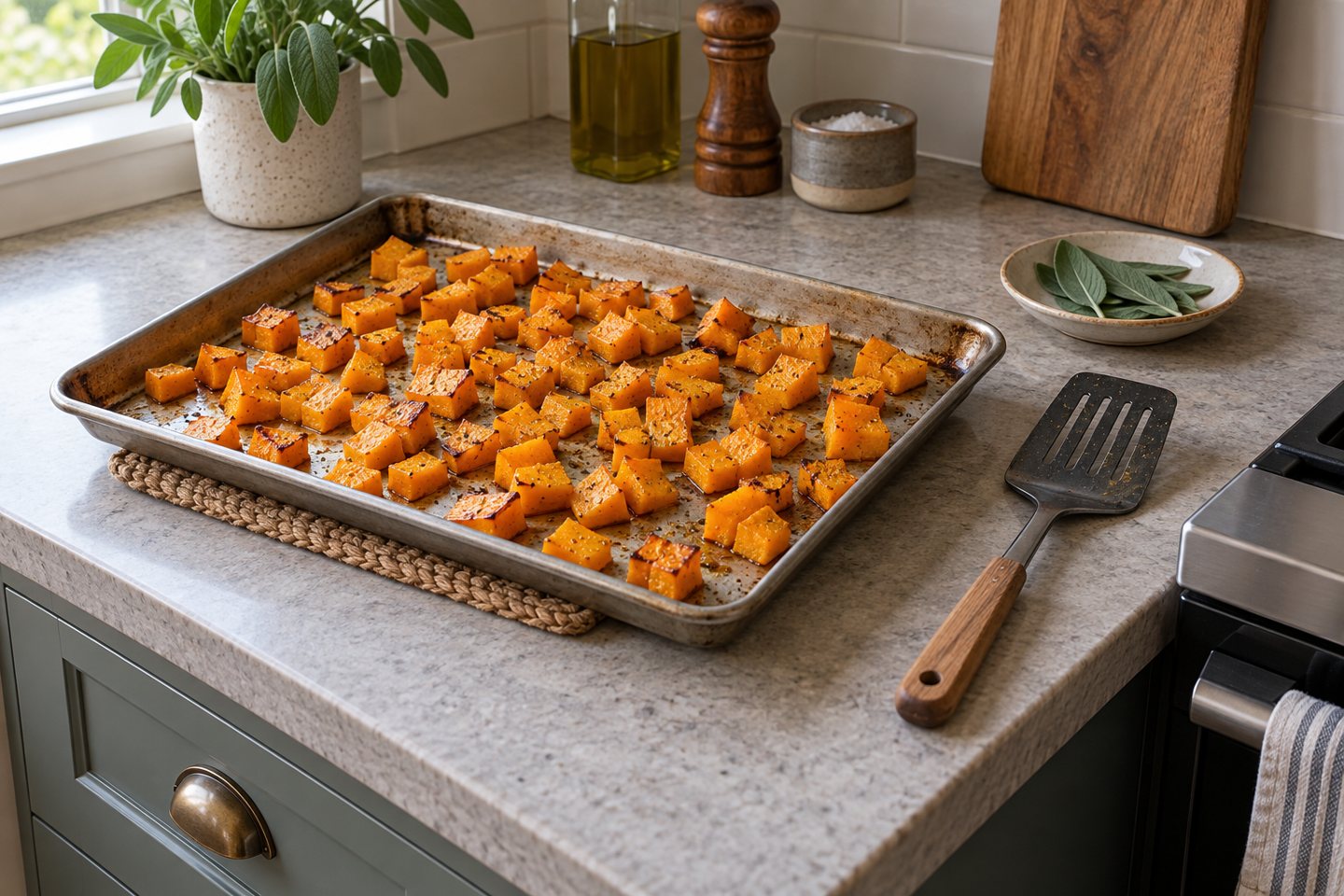
The recipe calls for 500 g of flesh after peeling and removing the seeds. That is different from buying a squash that weighs 500 g on the shop scale. If you buy prepared cubes, weigh them and look at their size before roasting. We suggest pieces around 1.5 cm so the tray can cook reasonably evenly. Large chunks may soften later than the small ones. A sharp knife, stable board and a little extra preparation time are more useful than promising that every whole squash can be peeled in a fixed number of minutes.
Roast until a fork can do the work
The useful endpoint is soft squash with a little colour, not an exact shade or a timer alone. Spread the pieces in a single layer and turn once. If they still resist a fork, give them more time before attempting the sauce. A crowded tray and a small oven can change the result. Tesco’s separately linked squash-and-sage pasta is another example of a roast-first sauce, but it uses a different recipe. It is a technique reference, not evidence that BELLY has kitchen-tested this dish.
Build the coating before folding in the pasta
Warm sliced garlic and sage gently in a little oil, then add the rinsed tinned white beans and a measured splash of reserved pasta water. Once the beans are hot throughout, add half the tender squash and mash it into that liquid. This keeps the work in the pan instead of asking you to lift hot squash into a countertop appliance. A fork or masher will leave visible pieces. Make sure the pan is stable and take care with hot oil and water. Stir before deciding whether the coating needs another splash.
Keep the sauce thick enough to coat Penne
Reserved pasta water is an adjustment, not a second sauce recipe. Start with the measured amounts in the method, combine gently, then add more only if needed. You may not use the whole mug. Folding the remaining squash cubes into the pasta at the end preserves some pieces instead of mashing the entire tray. If the mixture looks loose, pause the additions rather than throwing in an unmeasured thickener. If it becomes tight, loosen gradually over a low heat. Add the lemon off the heat and taste before using more.
Choose white beans and herbs deliberately
Cannellini beans are part of this recipe rather than a topping added after the image was made. We specify the drained weight because tins and their liquid content vary. Tinned butter beans can replace them at the same drained weight for a different shape; keep them whole as you warm the pan. Sage has a distinct flavour, so start with the stated six leaves. Parsley added at the end gives a different finish if that is what you have. Cheese, butter, chilli and other additions are personal changes; they are not hidden ingredients in the base dish.
Be precise about protein and allergens
The Penne specification identified by BELLY’s owner gives 20 g protein per 100 g dry pasta. With 150 g dry Penne divided into two stated servings, the pasta component contributes 15 g protein per serving. Beans and other ingredients change the full meal, but we have not calculated that total. Do not describe a whole bowl with the pasta-only number. BELLY contains wheat, gluten and lupin, and its blend includes oat fibre. A recipe without added cream is not automatically suitable for every allergy or dietary requirement. Read all current labels, including cross-contact advice.
Store the leftovers safely, then plan another bowl
Cool and refrigerate leftovers within two hours, use them within 48 hours and reheat only once until steaming hot throughout, following shorter ingredient instructions where relevant. The Food Standards Agency source below supplies that guidance. The complete linked recipe contains quantities, overlapping cooking steps and swaps. It is an original editorial development, not a kitchen-tested result; every generated image is labelled. BELLY remains sold out, so another available pasta can make tonight’s dinner. Follow its own instructions and nutrition label rather than transferring our product figures to it.
Sources and editorial checks
Sources checked 22 October 2026. Practical cooking suggestions are BELLY editorial guidance. Nutrition and food-storage facts are attributed to the sources below.